
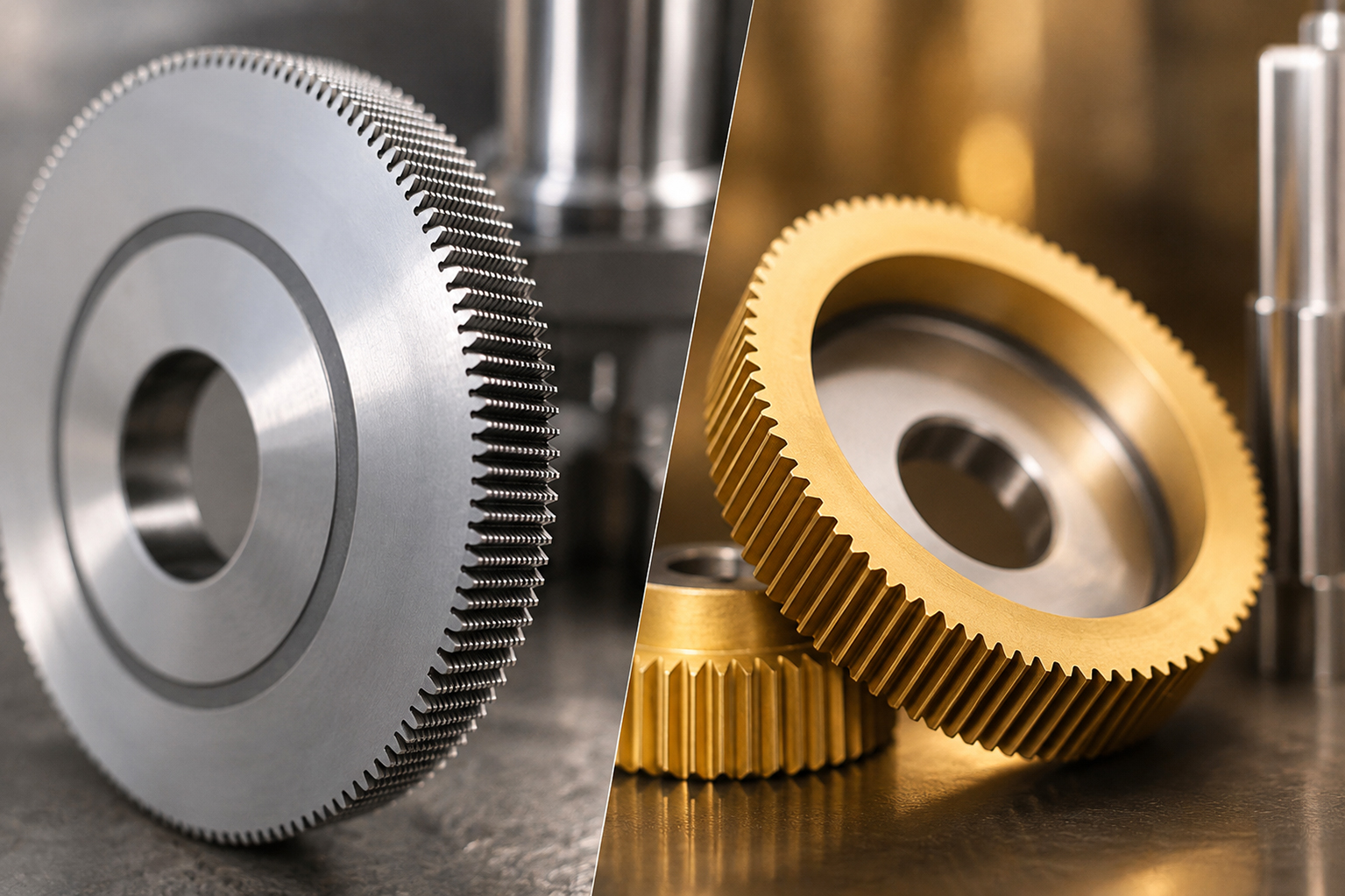
Gears are among the most critical components in mechanical power transmission systems. From automotive transmissions to industrial machinery, the quality and accuracy of gears directly affect performance, efficiency, and durability. Two important tools used in gear manufacturing are gear shaper cutters and gear shaving cutters. Although they may appear similar, they serve very different purposes in the production process.
What is a Gear Shaper Cutter?
A gear shaper cutter is a cutting tool used to generate gear teeth on a gear blank. It is considered a primary machining tool because it creates the gear tooth profile from solid material.
The cutter resembles a small gear or pinion and is manufactured with precise cutting edges. During operation, the cutter reciprocates vertically while rotating in synchronization with the gear blank. This coordinated motion generates the involute tooth profile required for proper gear meshing.
How It Works
The gear shaper cutter and the gear blank rotate together as though they are meshing gears. As the cutter moves up and down, it removes material during each cutting stroke. Gradually, the tooth spaces are formed until the complete gear profile is produced.
Advantages of Gear Shaper Cutters
- Cuts both external and internal gears
- Can machine gears close to shoulders, flanges, and obstructions where hobbing is difficult.
- Provides high accuracy and good tooth profile generation.
- Versatile—can produce spur gears, helical gears, splines, and sprockets.
- One cutter can be used for different numbers of teeth of the same module and pressure angle.
- Suitable for interrupted surfaces such as gears with keyways or holes.
- Easy to resharpen, giving a longer tool life and reducing tooling costs.
- Economical for small and medium production batches.
Gear shaper cutters are widely used because they offer flexibility, accuracy, and the ability to produce both internal and external gears efficiently.
Limitations of Gear Shaper Cutters
- Lower production rate compared to gear hobbing due to the reciprocating cutting motion.
- Longer machining time, making it less suitable for mass production.
- Higher machine complexity and maintenance requirements.
- Tool wear can affect gear accuracy if not monitored.
- Less economical for large-scale production than hobbing.
- Requires skilled setup and alignment to achieve accurate gear profiles.
- Limited cutting speed because of the reciprocating action of the cutter.
While gear shaper cutters are versatile and can produce internal gears, they are generally slower and less productive than gear hobbing for high-volume manufacturing.
Why Both Processes Are Important
In modern gear manufacturing, creating a gear and refining it are equally important. A gear produced only by shaping may have acceptable geometry but may not meet stringent requirements for noise, smooth operation, or precision.
Shaping establishes the tooth profile, while shaving enhances the final quality by correcting minor deviations and improving surface finish. This combination helps manufacturers achieve the performance standards required in automotive transmissions, industrial gearboxes, and precision mechanical systems.
Typical Gear Manufacturing Sequence
- Material Selection – Choose suitable material according to gear requirements.
- Blank Preparation – Produce the gear blank by casting, forging, or machining.
- Turning and Facing – Machine the blank to the required dimensions.
- Gear Tooth Cutting – Cut teeth using processes such as hobbing, shaping, or milling.
- Heat Treatment – Harden the gear to improve strength and wear resistance.
- Finishing Operations – Perform grinding, shaving, honing, or lapping to improve accuracy and surface finish.
- Inspection and Testing – Check dimensions, tooth profile, pitch, and quality.
- Final Assembly/Packaging – Assemble the gear into the mechanism or prepare it for delivery.
Sequence:
Material Selection → Blank Preparation → Turning/Facing → Gear Tooth Cutting → Heat Treatment → Finishing → Inspection → Assembly.
Conclusion
Gear shaper cutters and gear shaving cutters play distinct but complementary roles in gear manufacturing. The gear shaper cutter is responsible for creating the gear teeth by removing substantial material from a blank, while the gear shaving cutter refines those teeth by removing only a microscopic amount of material to improve accuracy and surface quality.
Understanding the difference between these tools helps manufacturers select the right process for achieving optimal gear performance, longer service life, and higher production efficiency. In simple terms, gear shaping creates the gear, and gear shaving perfects it.