
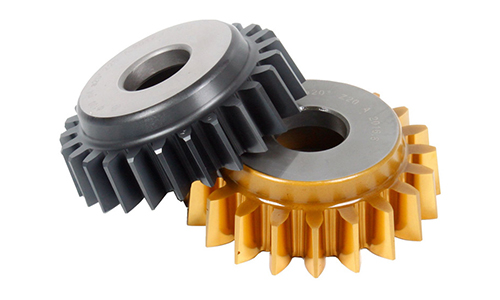
Gear manufacturing is one of the most precise areas in mechanical engineering, and among the various methods used, gear shaping stands out for its ability to produce high-accuracy internal and external gears. At the center of this process is a critical tool: the gear shaper cutter.
What is a Gear Shaper Cutter in Gear Manufacturing?
A gear shaper cutter is a specialized cutting tool shaped somewhat like a small gear itself. It is mounted on a gear shaping machine and performs a reciprocating motion while slowly rotating in synchronization with the workpiece.
Instead of slicing material in a single pass, it gradually generates the gear tooth profile through repeated cutting strokes. This makes it highly accurate and ideal for complex gear forms.
How Gear Shaping Works
Gear shaping is a machining process used to cut gears using a gear shaper cutter that moves up and down in a reciprocating motion. The cutter and the gear blank rotate slowly in a synchronized way, similar to two gears meshing together.
During the cutting stroke, the cutter removes a small amount of material, and during the return stroke, no cutting takes place. This process continues until the full gear tooth shape is formed. Gear shaping is mainly used for making internal gears, external gears, and splines with high accuracy and good surface finish.
Types of Gear Shaper Cutters
Gear shaper cutters are classified based on the type of gears they produce. Disk-type cutters are mainly used for external gears, while hub-type cutters are used for internal gears. For complex designs, helical gear shaper cutters are used to produce helical gears with smooth operation.
They are also divided into standard and special cutters, where standard cutters are used for general work and special cutters are designed for specific gear profiles. Another important type includes semi-topping and topping cutters, which help improve tooth accuracy and reduce interference.
The selection of cutter depends on factors like module, pressure angle, and gear type.
Materials Used in Gear Shaper Cutters
Most gear shaper cutters are made from:
- High-Speed Steel (HSS) – commonly M2 or M35 grade
- Powder metallurgy steel (PM-HSS) – for higher wear resistance
These materials ensure durability even under high-speed machining conditions.
Where Gear Shaper Cutters Are Used
Gear shaper cutters are used in industries that require accurate gears and splines. The automotive industry uses them for transmission gears, clutch hubs, and differentials. In the aerospace industry, they are used for precision gear systems in engines and controls.
They are also used in industrial machinery for gearboxes, pumps, and heavy equipment. In marine and defense sectors, they help produce strong and reliable gears for ships and military systems.
Advantages of Gear Shaper Cutters
Gear shaper cutters offer several important benefits in gear manufacturing:
- Ability to produce internal gears and splines
- High accuracy in gear tooth profile
- Suitable for gears in blind holes and confined spaces
- Can cut complex gear assemblies with ease
- Produces good surface finish and smooth operation
These advantages make gear shaper cutters highly useful in precision engineering and modern manufacturing industries.
Conclusion
A gear shaper cutter is a fundamental tool in precision gear manufacturing. Its unique reciprocating cutting action allows engineers to produce accurate, reliable gear profiles that are difficult or impossible to achieve using other methods.
From automotive transmissions to heavy industrial machinery, these cutters play a quiet but essential role in keeping mechanical systems running smoothly and efficiently.